In the labyrinths of the digital mirror
the idealization of image and the eclipse of otherness in hyperconnected adolescence
Keywords:
adolescence, Social media, Virtuality, Otherness, psychoanalysisAbstract
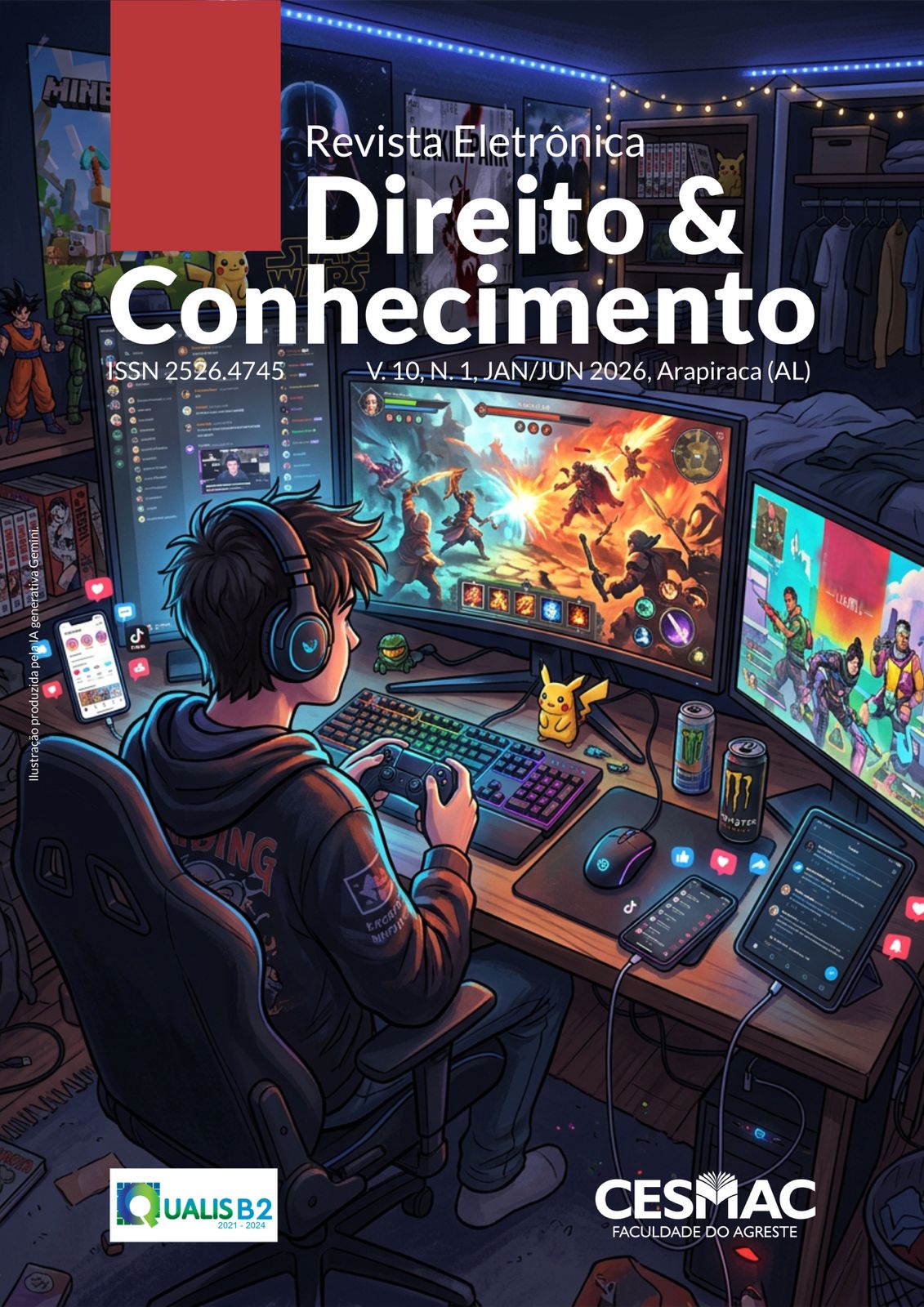
This article discusses a problem that is increasingly present in the lives of adolescents: the impact of digital hyperconnectivity on their ability to recognize others and maintain meaningful relationships. Although adolescents are more connected than ever through digital devices and social networks, many struggle to sustain face-to-face relationships over time. The study is guided by the hypothesis that excessive and unfiltered use of social media gradually undermines relational skills that are fundamental to human coexistence. This is a qualitative and bibliographical research, supported by the ideas of Freud and Lacan, highlighting the mirror stage theory, and in dialogue with Zygmunt Bauman, Sônia Albert, Christian Dunker, Colette Soler, Andrea Brunetto, among other authors who help to reflect on identity, affection, the fluidity of bonds, and the ethics of encountering the other. The findings indicate that the digital environment has two sides: while it creates new symbolic possibilities, it also intensifies comparison and promotes idealized standards of perfection that are difficult to achieve. This can contribute to feelings of inadequacy and weaken the recognition of others as subjects. The study concludes that virtuality should not be viewed solely as a problematic environment. When used consciously and accompanied by family, school, and clinical care, digital spaces can contribute to the development of more empathetic, ethical, and lasting relationships among adolescents, both online and offline.
Downloads
References
ALBERT, Sônia. O adolescente e o Outro. Rio de Janeiro: Zahar, 2004.
ALBERTI, Sonia. Esse sujeito adolescente. 3. ed. Rio de Janeiro: Rios Ambiciosos/Contra Capa, 2009.
BAUMAN, Zygmunt. Modernidade líquida. Rio de Janeiro: Zahar, 2001.
BRUNETTO, Andréa. Psicanálise e educação: sobre Hefesto, Édipo e outros desamparados dos dias de hoje. Campo Grande: Editora da UFMS, 2008.
DARRIBA, Vinicius. A falta conceituada por Lacan: da coisa ao objeto a. Ágora: Estudos em Teoria Psicanalítica, Rio de Janeiro, v. 8, n.1, p. 63-76, 2005. Disponível em: https://doi.org/10.1590/S1516-14982005000100005.
DUNKER, Christian Ingo Lenz. Reinvenção da intimidade: políticas do sofrimento cotidiano. São Paulo: Ubu Editora, 2017.
FREUD, Sigmund. O mal-estar na civilização: novas conferências introdutórias à psicanálise e outros textos (1930-1936). São Paulo: Companhia das Letras, 2010. (Obras completas, v. 18).
FREUD, Sigmund. O mal-estar na cultura. In: MORAES, Maria Rita Salzano; HELIODORO, Pedro; IANNINI, Gilson (org.). O mal-estar na cultura e outros escritos de cultura, sociedade, religião. Belo Horizonte: Autêntica, 2025. (Obras Incompletas de Sigmund Freud).
FREUD, Sigmund. Amor, sexualidade, feminilidade. Belo Horizonte: Autêntica, 2018.
LACAN, Jacques. O estádio do espelho como formador da função do eu, tal como nos é revelado na experiência psicanalítica (1949). In: LACAN, Jacques. Escritos. Tradução de Vera Ribeiro. Rio de Janeiro: Zahar, 1998. p. 93-102.
LACAN, Jacques. A significação do falo (1958). In: LACAN, Jacques. Escritos. Tradução de Vera Ribeiro. Rio de Janeiro: Zahar, 1998. p. 692-703.
LEVINAS, Emmanuel. Totalidade e infinito: ensaio sobre a exterioridade. 2. ed. Lisboa: Edições 70, 2008.
MENDES, Elzilaine Domingues. Impasses na constituição do sujeito causado pelas tecnologias digitais. Revista Subjetividades, [online], v. esp. 2, p. 1-10, 2020. Disponível em: https://doi.org/10.5020/23590777.rs.v20iesp2.e8984. Acesso em: 19 abr. 2026.
SOLER, Colette. O que faz laço? Tradução: Elisabeth Saporiti. São Paulo: Escuta, 2016.
Downloads
Published
How to Cite
Issue
Section
License
Copyright (c) 2026 Revista Eletrônica Direito e Conhecimento

This work is licensed under a Creative Commons Attribution-NonCommercial-NoDerivatives 4.0 International License.
Revista Eletrônica Direito e Conhecimento© 2017 by Faculdade CESMAC do Agreste is licensed under Creative Commons Attribution-NonCommercial 4.0 International. To view a copy of this license, visit https://creativecommons.org/licenses/by-nc/4.0/
Revista Eletrônica Direito e Conhecimento © 2017 by Faculdade CESMAC do Agreste is licensed under CC BY-NC 4.0